

Moving to a new home can be exciting, but when children are part of the process, it often requires additional planning and patience. Kids rely heavily on routines, familiar surroundings, and daily habits, so a move can sometimes feel confusing or overwhelming for them. Parents often find that the challenge is not just managing the logistics of the move, but also helping their children adjust emotionally to the change.
The good news is that moving with kids can become a positive and even memorable experience when handled thoughtfully. Preparation, communication, and keeping children involved in the process can make a major difference. When families understand what to expect and prepare their children early, the transition tends to feel much smoother for everyone.
At Smoother Movers, we frequently help families relocate, and we know that small steps like explaining the process, preparing children’s spaces, and maintaining routines can make the move far less stressful.
Talk About the Move Early
One of the most helpful things parents can do is talk about the move with their children as early as possible. Sudden changes can be difficult for kids, especially if they feel like decisions are happening around them without their involvement. Explaining the move early gives them time to process the idea and ask questions.
You might explain why the family is moving, what the new home will be like, or what exciting opportunities might come with the change. For example, there may be a bigger backyard, new parks nearby, or more space in the house. When children understand the reason behind the move, it becomes easier for them to accept the change.
It can also be helpful to walk older children through the practical side of relocation. Showing them how the moving day process works, including how items are packed, transported, and unpacked, helps remove uncertainty. Understanding what happens on moving day often makes children feel less anxious about the transition.
Involve Kids in the Moving Process
Children often feel more comfortable when they are part of the moving process rather than simply watching everything happen around them. Involving kids in small tasks can give them a sense of control and make the move feel like a family project.
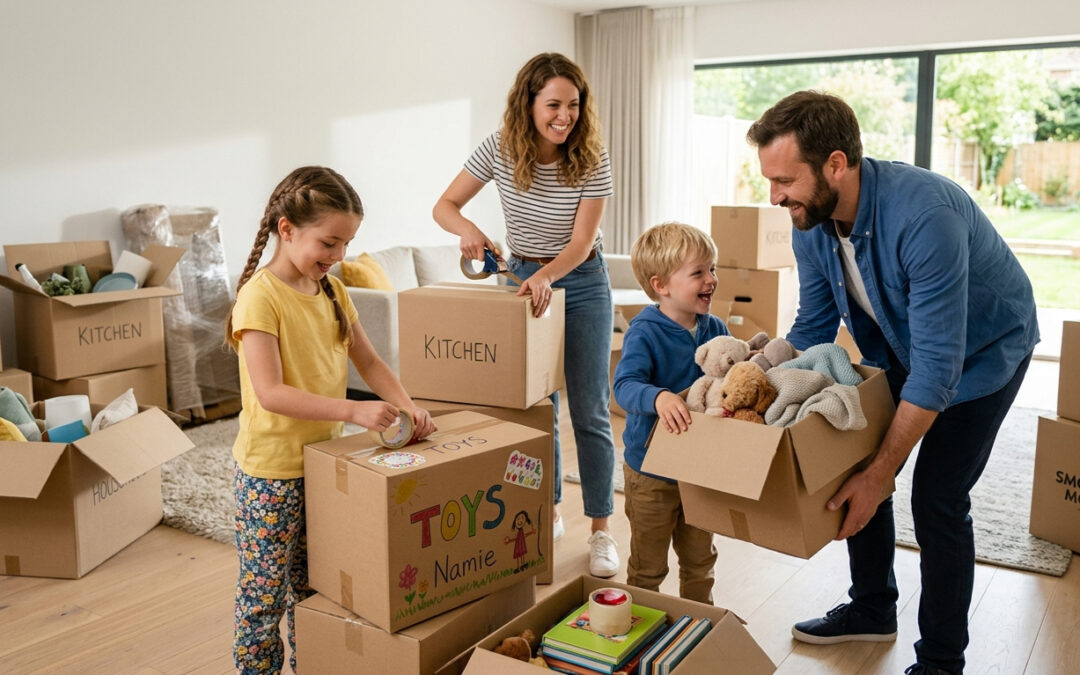
For example, children can help pack their toys, books, or clothing. They might decorate their moving boxes, label them with stickers, or choose how their new room will be arranged. These small responsibilities help kids feel included while also making them more excited about the move.
Encouraging kids to sort their belongings can also be helpful. Before packing begins, families may find it useful to review how to declutter before a move and save on costs, because reducing unnecessary items can simplify the entire relocation process. When children help decide which toys or clothes they want to keep, donate, or give away, it teaches them organization while making packing easier.

Keep Familiar Items Close
During a move, familiar items can provide comfort and stability for children. Favorite toys, blankets, stuffed animals, or books often help kids feel safe even when their environment is changing.
Many families find it helpful to pack a small “first night box” for each child. This box might include pajamas, a favorite toy, a bedtime book, snacks, and other comforting items. When you arrive at the new home, these items can be unpacked immediately so children have something familiar while the rest of the house is still being organized.
Having familiar belongings easily accessible can help kids feel settled faster and reduce stress during the first night in a new environment.
Maintain Daily Routines
One of the most effective ways to support children during a move is by maintaining their usual routines as much as possible. Bedtimes, meal times, and family traditions provide a sense of normalcy during a period of change.
Even though moving can disrupt schedules temporarily, keeping daily routines consistent helps children feel secure. Simple activities like reading a bedtime story, having breakfast together, or following normal evening routines can make a big difference.
Children often handle change better when their daily habits remain predictable. This sense of stability helps them adjust more comfortably to their new home.
Visit the New Neighborhood if Possible
If your move is local or within driving distance, visiting the new neighborhood before moving day can help children feel more excited about the transition. Seeing the new home, exploring nearby parks, or visiting the school area can make the move feel more real and less intimidating.
Pointing out fun locations like playgrounds, sports fields, or walking paths helps kids visualize their future in the new community. This can shift their focus from what they are leaving behind to what they might gain in the new environment.
If visiting in person is not possible, looking at photos or maps online together can still help children imagine their new surroundings.
Plan for Moving Day
Moving day can be busy and sometimes overwhelming, especially for young children. Planning ahead can help make the day feel calmer for the entire family.
Some families arrange for relatives or friends to watch younger children during the move. This allows parents to focus on coordinating the move while children remain in a quieter environment.
If kids will be present during the move, preparing activities, snacks, or games can help keep them occupied. Having a designated area where they can relax while movers work can prevent unnecessary stress or distractions.
Professional moving services also play an important role here, as experienced movers handle the heavy lifting and logistics so families can focus on supporting their children.
Set Up Kids’ Rooms First
Once you arrive at your new home, one of the best ways to help children settle quickly is to set up their room first. Seeing their bed, toys, and personal items arranged in the new space helps create a sense of familiarity.
Even if the rest of the home still has boxes everywhere, having their room organized can help children feel more comfortable during the first few days.
Letting kids help arrange their toys, decorations, or furniture can also make the new room feel more like their own space.
Be Patient During the Adjustment Period
Every child responds differently to moving. Some children may feel excited about the change, while others may take time to adjust. It is normal for kids to feel sad about leaving friends, schools, or familiar places.
Parents can help by listening to their concerns and encouraging open conversations about how they feel. Spending time exploring the new neighborhood together, visiting parks, or meeting neighbors can help children begin forming new connections.
With time, most children adjust well and begin to see the new home as their new comfort zone.

FAQs
How can I make moving less stressful for my child?
Talking about the move early, maintaining routines, and involving children in packing and preparation can help reduce stress and make the transition easier.
Should children help pack for a move?
Yes. Allowing children to pack some of their belongings can help them feel involved and more comfortable with the moving process.
How can I help my child adjust to a new home?
Setting up their room first, exploring the neighborhood together, and keeping daily routines consistent can help children adjust faster.
Is it better for kids to stay elsewhere on moving day?
For younger children, spending the day with relatives or friends can sometimes reduce stress while the moving process is underway.
How long does it take kids to adjust after moving?
Every child is different, but many begin adjusting within a few weeks as they build new routines and friendships.
Make Your Family Move Easier
Moving with kids may require extra preparation, but it can also become an exciting new beginning for the entire family. With good planning, open communication, and the right support, families can turn a stressful move into a smooth and positive experience.
At Smoother Movers, we help families manage every stage of relocation, from planning and packing to transportation and unloading. If your family is preparing for a move, you can contact our team to discuss your plans and learn how we can help make the transition easier.