

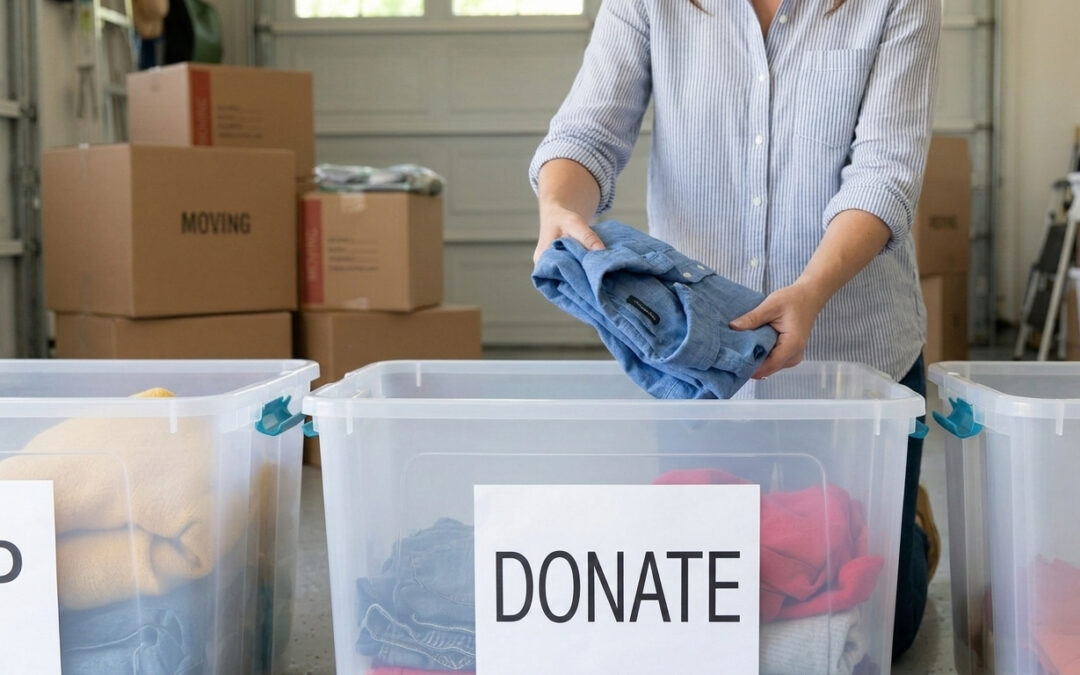
Moving to a new home is the perfect opportunity to reassess what you really need and what can be left behind. Many people are surprised by how many unnecessary items accumulate over the years. Decluttering before a move not only helps simplify the relocation process but can also reduce moving costs significantly.
The more items you move, the more time, space, and resources are required to transport them. By reducing the number of belongings before moving day, you can make the entire process faster, easier, and more affordable.
At Smoother Movers, we often encourage customers to declutter before moving because it helps streamline the relocation and makes unpacking in the new home much more manageable.
Understanding how to declutter effectively before a move can help you save money while creating a fresh start in your new space.
Why Decluttering Before Moving Matters
Decluttering is more than just cleaning up your home. It is about deciding which items truly deserve space in your new environment.
Moving items you no longer use means spending time packing them, paying to transport them, and then finding storage space for them in your new home. In many cases, people spend money moving things they eventually throw away or leave unused in another closet.
Reducing the number of belongings before moving day offers several benefits. It can lower moving costs, reduce packing time, make the loading process faster, and simplify unpacking after the move. Movers can work more efficiently when there are fewer items to handle, which can also shorten the overall moving timeline.
Decluttering also helps your new home feel more organized from the very beginning. Instead of filling your new space with items you rarely use, you can focus on creating a cleaner, more functional environment that better fits your current lifestyle.
Start Early
The biggest mistake many people make is waiting until the last minute to declutter.
Sorting through belongings takes longer than most people expect. Closets, storage rooms, garages, and basements often contain items that have not been used in years, and deciding what to keep or remove requires time and careful thought.
Starting the decluttering process several weeks before moving day gives you enough time to make thoughtful decisions about what to keep and what to let go of. It also prevents the stress of trying to sort through everything during the final days before the move.
A good strategy is to go room by room instead of trying to tackle the entire house at once. This approach makes the process feel more manageable and prevents it from becoming overwhelming. Creating a simple checklist for each room can also help you track progress and stay organized.
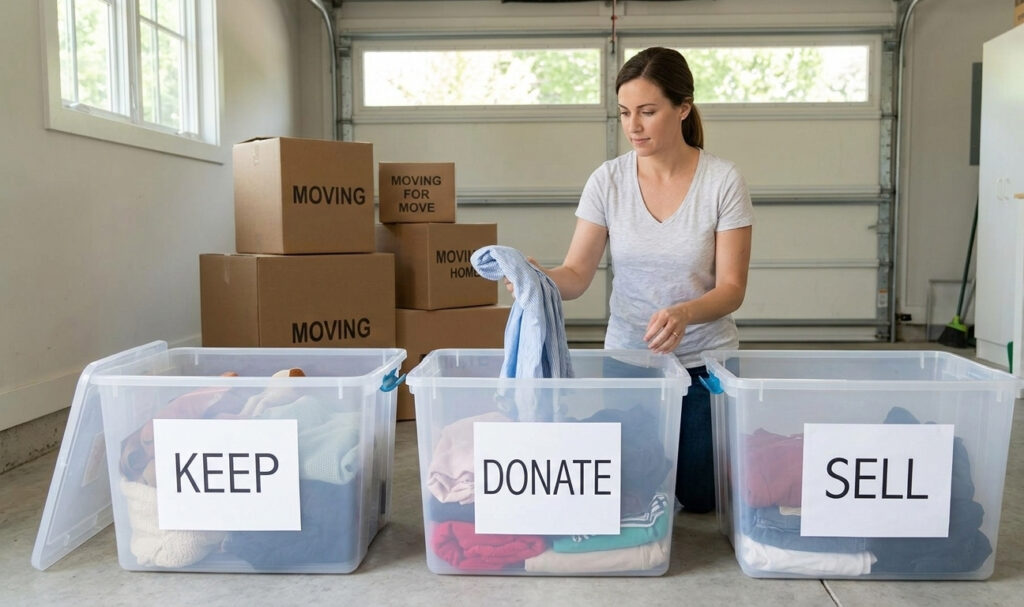
Use the “Keep, Donate, Sell, Discard” Method
One of the easiest ways to declutter efficiently is by dividing items into four categories.
Keep items that you regularly use or that have meaningful value. These are the belongings that truly deserve space in your new home.
Donate items that are still in good condition but are no longer needed. Many household items can still be useful to someone else.
Sell items that may still have value, such as furniture, appliances, or electronics. Selling these items before the move can help recover some of the money spent on relocation.
Discard items that are broken, outdated, or no longer useful. These items only add unnecessary weight and clutter to your move.
This method helps prevent indecision and ensures that every item is given a clear destination, making the decluttering process faster and more structured.
Focus on High-Volume Areas
Some areas of the home accumulate more items than others. These are the best places to begin decluttering.
Closets often contain clothing that hasn’t been worn in years. Kitchens may have duplicate utensils or appliances that rarely get used. Garages and storage spaces tend to collect tools, boxes, seasonal decorations, and miscellaneous items that no longer serve a purpose.
By focusing on these high-volume areas first, you can quickly reduce the number of belongings that need to be packed and transported. Even removing a small portion of these items can significantly decrease the overall moving workload.
This approach also creates quick progress, which can make the decluttering process feel more motivating and productive.
Reduce the Number of Boxes
Every item you remove before moving reduces the number of boxes that must be packed, loaded, and transported.
Fewer boxes mean less time spent packing and unpacking. It also means the moving crew can work more efficiently on moving day, which may reduce the overall cost of the move.
When preparing for relocation, organizing your belongings in advance helps streamline the entire moving day process and allows movers to focus on transporting only the items you truly need.
It also makes unpacking easier once you arrive at your new home, since you will only be dealing with items that serve a purpose in your daily life.
Sell Larger Items You Don’t Need
Large furniture pieces can take up significant space in a moving truck. If you already know certain items will not fit your new home or style, selling them before the move can be a smart decision.
Furniture marketplaces, local listings, and community groups often make it easy to sell items quickly. Many buyers are happy to purchase used furniture in good condition at a lower price.
Selling unwanted furniture not only reduces moving costs but can also help offset some of the expenses associated with relocation. In some cases, selling just a few large items can noticeably reduce the amount of space required in the moving truck.
Donate Items in Good Condition
Many items that you no longer want may still be useful to others.
Clothing, household goods, books, and small furniture pieces are often welcomed by local charities or donation centers. Donating these items helps extend their useful life instead of sending them to landfills.
Donating items allows you to reduce clutter while helping people in need. It also prevents unnecessary waste and supports community organizations.
Decluttering with donation in mind can make the process feel more meaningful and productive, knowing that items you no longer need can still benefit someone else.
Dispose of Unusable Items Properly
Not everything can be donated or sold. Some items may be broken, outdated, or unsafe to keep.
These items should be disposed of responsibly. Recycling centers, waste collection programs, and local disposal services can help handle materials such as electronics, batteries, or damaged furniture properly.
Removing unusable items before moving day prevents unnecessary packing and transport of things that would ultimately be discarded later. It also helps ensure that waste is handled in a more environmentally responsible way.
Pack Only What You Truly Need
After decluttering, the packing stage becomes much easier.
You will have fewer items to organize and fewer boxes to label. This also allows professional movers to work more efficiently when loading and transporting your belongings.
For homeowners who prefer additional assistance, packing services can help prepare belongings safely and efficiently before the move.
Professional packing ensures that the remaining items you truly value are properly protected during transportation.
Consider Storage for Items You Want to Keep
Sometimes people have belongings they want to keep but do not have immediate space for in their new home.
In these situations, temporary storage can provide a practical solution.
Professional storage services allow you to safely store items until you decide what to do with them later. This can be especially useful during renovations, downsizing, or transitional moves.
Storage gives you flexibility without forcing rushed decisions during the moving process.

Benefits of Decluttering Before a Move
Decluttering offers several important advantages beyond saving money.
First, it reduces the physical effort required during the move. Fewer items mean less lifting, loading, and unpacking.
Second, it helps your new home start off organized instead of cluttered.
Finally, decluttering creates a fresh beginning. Moving into a new home with only the items you truly value can make the transition feel cleaner, simpler, and more positive.
FAQs
How far in advance should I start decluttering before a move?
It is best to start decluttering at least four to six weeks before moving day. This gives you enough time to sort items without feeling rushed.
Does decluttering really reduce moving costs?
Yes. Fewer belongings mean fewer boxes, less loading time, and less space required in the moving truck, which can reduce overall costs.
What items should I get rid of before moving?
Items that are broken, rarely used, outdated, or no longer needed are good candidates to remove before the move.
Should I declutter before packing?
Yes. Decluttering should always happen before packing so you only spend time packing items you truly want to keep.
What if I’m not sure whether to keep certain items?
If you are unsure, consider placing those items in temporary storage until you decide whether they belong in your new home.
Start Your Move with a Fresh Beginning
Decluttering before a move can save time, reduce costs, and make the entire relocation process more efficient. By removing unnecessary items early, you simplify packing, transportation, and unpacking in your new home.
At Smoother Movers, our team helps make every stage of the move easier, from preparation and packing to transportation and delivery.
If you are planning an upcoming move and want guidance from experienced professionals, you can contact our team to discuss your relocation and learn how we can help make your move smooth and stress-free.