


Moving day is the moment when weeks of planning finally turn into action. Boxes are packed, furniture is ready, and the moving crew arrives to transport everything to your new home. For many people, the biggest source of stress is not the heavy lifting itself. It is not knowing exactly what will happen, when it will happen, and what they should be ready for.
Understanding the moving day process ahead of time can make the entire experience feel more manageable. At Smoother Movers, we guide customers through each stage so the day feels organized instead of chaotic. From protecting furniture and reviewing access points to loading, transportation, and unloading, every part of the move follows a clear process designed to keep things safe and efficient.
Below is a step-by-step look at what usually happens on moving day and how professional movers help keep everything running smoothly.
The Arrival of the Moving Crew
Moving day usually begins early in the morning when the crew arrives at your home. One of the first things we do is introduce the team and review the details of the move with you.
This short conversation helps confirm that everyone is aligned before any work begins. We go over the destination address, review the main items being moved, and identify anything that needs special handling. This may include fragile items, antiques, artwork, electronics, or larger pieces of furniture that need extra care.
We also take a quick look at the property itself. Access matters more than many people expect. Staircases, elevators, long hallways, tight corners, parking availability, and building rules can all affect how the move is handled. Reviewing these details at the start helps the day move faster and reduces surprises later.
If you have any last-minute questions, this is the best time to ask them. Clear communication at the beginning helps make the rest of the day more efficient.
Protecting Your Home and Furniture
Before anything is carried out, the next step is protecting both the home and the belongings inside it.
This part of the process may seem simple, but it makes a big difference. Floors, walls, door frames, and tight hallways are the places most likely to get marked during a move if proper care is not taken. Furniture also needs protection before it is lifted, carried, or loaded into the truck.
Protecting High-Traffic Areas
Movers often pay close attention to the main paths items will travel through. Entryways, stairwells, hallways, and corners all require extra care because bulky furniture must pass through them safely.
Wrapping Furniture Properly
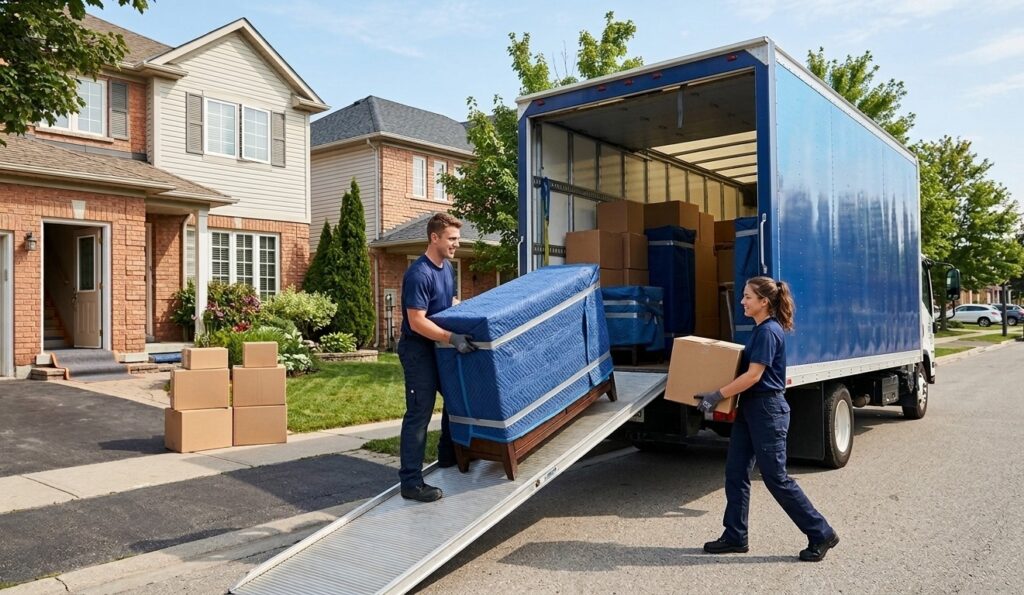
Large furniture pieces such as sofas, dressers, tables, and bed frames are usually wrapped or padded before they leave the home. This helps protect surfaces from scratches, dents, and pressure during handling and transport.
For customers who want extra help before the move begins, our packing services can help prepare fragile and valuable items in advance so moving day feels less overwhelming.
Organizing the Loading Process
Once everything is protected and prepared, the crew begins loading the truck. This is where experience matters. Loading a moving truck is not just about carrying items out quickly. It is about placing them in a way that keeps them secure during transportation and makes unloading easier later.
Strategic Placement of Heavy Items
Heavy and bulky furniture usually goes in first. These pieces create a stable base inside the truck. Larger items are positioned carefully so weight is distributed properly and movement during transport is reduced.
Protecting Fragile Belongings
Boxes containing fragile items are usually placed in safer positions where they will not be crushed or shifted by heavier items. Mirrors, artwork, lamps, and electronics often require special placement and extra padding.
Handling Specialty Items
Some belongings require specialized handling and equipment. Large instruments, for example, need additional protection and experience. Our piano moving services are designed for items that require extra care during lifting, loading, and transportation.
A well-organized truck helps prevent damage and keeps the move running more efficiently from start to finish.
Final Walkthrough Before Departure
Before the truck leaves your current home, there is usually a final walkthrough.
This step helps confirm that all scheduled items have been loaded and nothing has been left behind. It is a good time to check closets, storage rooms, garages, balconies, and smaller areas where loose items are sometimes forgotten.
It also gives you the chance to confirm any final details about the destination. If there are parking instructions, elevator access rules, or preferred unloading points at the new home, this is the right moment to go over them.
A few extra minutes spent here can prevent delays and confusion later.
Transportation to Your New Home
Once the truck is loaded and the walkthrough is complete, the next phase begins: transportation.
Everything inside the truck should already be secured with proper placement, padding, and support. During the drive, the main goal is keeping belongings stable and protected until arrival.
The length of this stage depends on the distance between locations. A local move may involve only a short drive, while larger relocations may take considerably longer. Either way, safe transportation is a key part of the moving day process.
This is also why early planning matters. If you are still in the planning stage, it helps to understand when to book movers before your move so you have enough time to prepare properly and avoid rushed decisions.
Unloading at the New Location
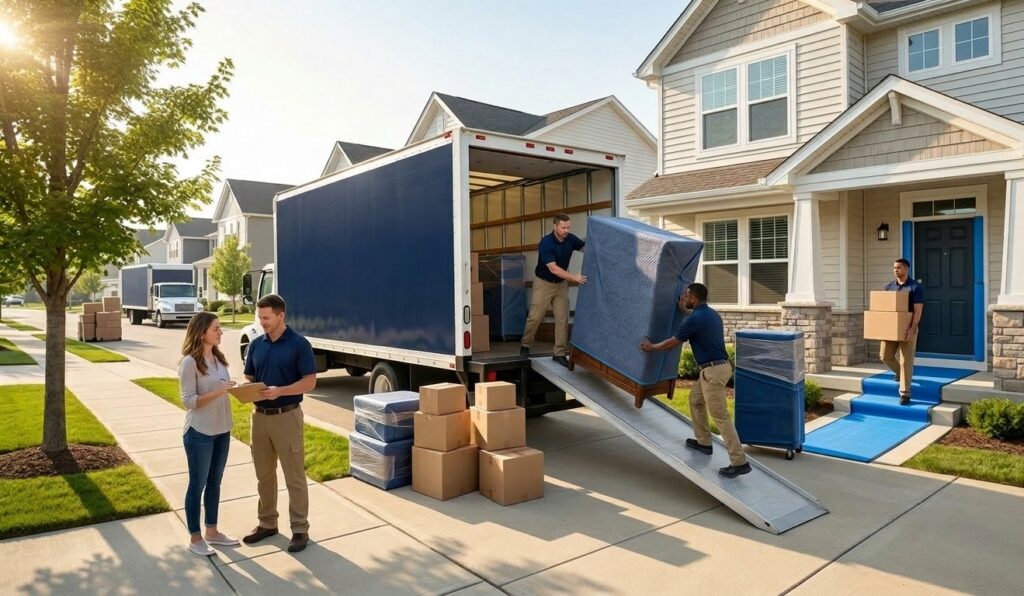
When the truck arrives at your new home, the unloading process begins. Before the first item comes off the truck, movers usually take a few moments to understand the layout of the space and where major items should go.
Placing Furniture in the Right Rooms
Instead of leaving everything near the entrance, movers typically carry furniture directly into the correct rooms. Beds go into bedrooms, sofas into the living room, and dining furniture into the proper space. This saves you from having to move large items again after the crew leaves.
Keeping Boxes Organized
Boxes are usually placed based on their labels so unpacking is easier later. When boxes are already in the right rooms, settling in becomes much less stressful.
For customers who need full relocation help beyond loading and transport, our moving services are designed to make the entire process more organized from pickup to delivery.
Optional Services That Can Make the Move Easier
Not every move is simple. Sometimes there are extra needs that require more than transportation alone.
Packing Support
If you do not have time to prepare everything yourself, professional packing can make a major difference. It helps reduce stress and gives fragile or valuable items better protection before moving day even starts.
Temporary Storage
Sometimes move-out and move-in dates do not line up perfectly. In that case, temporary storage can help bridge the gap. Our storage services can help keep belongings secure until the new home is ready.
These extra services can be especially useful during renovations, delayed closings, or more complicated moving schedules.
Final Steps After the Move
Once everything has been unloaded and placed inside the new home, the last part of the move takes place.
Movers make sure the main delivery is complete and that major items are where they need to be. At that point, the physical part of the move is largely finished. While unpacking still takes time, the most demanding part of the day has already been handled.
For many people, this is the moment when stress finally starts to drop. The truck is empty, the furniture is inside, and the new space begins to feel real.
FAQs
What time do movers usually arrive on moving day?
Most moving crews arrive earlier in the day. Starting in the morning gives enough time to load, transport, and unload without rushing.
How long does a typical move take?
That depends on the size of the home, the amount of furniture, access conditions, and the distance between locations. Smaller moves may take only a few hours, while larger homes may require most of the day.
Do I need to pack everything before movers arrive?
In most cases, yes. Boxes should usually be packed before moving day unless you have arranged professional packing support in advance.
Will movers place furniture in the correct rooms?
Yes. During unloading, movers typically place larger furniture items in the rooms where they belong so you do not have to reposition them later.
What if my new home is not ready yet?
If there is a delay between move-out and move-in, temporary storage can help keep your belongings secure until the new home is ready.
Ready for a Smoother Moving Day
Knowing what happens on moving day can make the experience feel much more manageable. Having the right team handling the process makes it even easier.
At Smoother Movers, we help customers through every stage of the move with careful planning, protection, loading, transportation, and unloading. If you are preparing for an upcoming move, you can contact our team to discuss your plans and get started.