

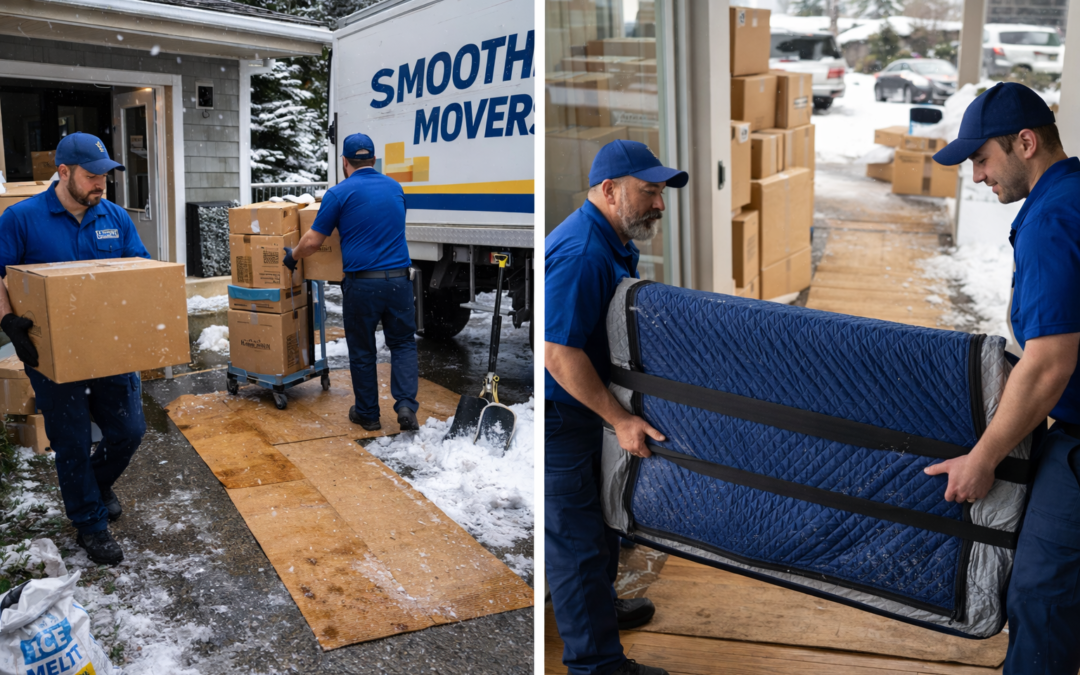
Winter moves get a bad reputation in Canada, and some of it is deserved. Sub-zero temperatures, icy driveways, shortened daylight hours, and unpredictable snowfall all add complexity to moving day. But winter is also the cheapest, least competitive time of year to move, with lower rates, better availability, and movers who are less rushed than their summer counterparts. Done right, a winter move can be one of the smoothest experiences of your life. Done without preparation, it can be one of the most stressful. This guide covers everything you need to know to land in the first category.
Most Canadians move between May and September. The result is peak-season pricing, limited mover availability, and a moving industry operating at full capacity. The period from October through March is a different world entirely. Rates drop, scheduling is flexible, and moving companies are able to give each job more time and attention. If your circumstances allow any flexibility in timing, the off-season window is genuinely worth considering provided you go in with your eyes open about what winter moving actually requires.
The Real Advantages of a Winter Move
The financial case for moving in winter is straightforward and significant. Moving companies price based on demand, and demand drops sharply after Thanksgiving. A move that costs $1,400 in July may run $200 to $400 less in January with the same company, same crew, and same level of service. On a cross-province move, the savings can be even more pronounced.
Advantages of Winter Moving
- Lower rates across the board
- Better availability, including weekends
- Less competition for moving dates
- Movers are less rushed and less fatigued
- Rental housing market less competitive
- Cold weather keeps wood furniture stable
- No heat stress on electronics during transit
Challenges to Plan For
- Ice and snow on driveways and walkways
- Shorter daylight window for the move
- Weather delays on long-distance routes
- Cold damage risk for certain items
- Wet floors and tracking through new home
- Heating needs in an empty new home
- Harder to do last-minute prep outdoors
Beyond cost, winter availability is a real advantage. During peak season, popular weekend dates in Vancouver, Surrey, and the Lower Mainland book out weeks or months in advance. In January or February you can often schedule a move on relatively short notice, and you are far more likely to get the exact date and time that works for your situation. For long distance moves, winter scheduling also tends to produce more consistent delivery timelines because the company is not managing multiple large jobs simultaneously.

How Winter Affects Moving Day Logistics
The most immediate impact of a winter move is physical: ice and snow make every surface more dangerous and every piece of furniture heavier to navigate. Wet boots track through a new home. Cold temperatures affect how materials behave. Shortened daylight means a move that starts at 8 am has a harder cutoff if it runs long. None of these are insurmountable, but each one requires deliberate preparation.
Driveways, Walkways, and Entry Points
Clear snow and ice from all access points before the moving crew arrives. This means your driveway, front path, any back or side entrance being used, and the path between the truck and your front door. Salt or sand all icy surfaces. If you are moving out of a condo or apartment, contact your building manager in advance to confirm that common areas, the loading dock, and the path from the elevator to the truck will be cleared and treated on moving day.
At your destination, do the same before the truck arrives. If you are moving into a home where the current owners have already vacated, you may arrive to find an unsalted driveway and a frozen front step. Build extra time into your arrival plan and bring a bag of ice melt in your personal vehicle.
⚠ Safety first: Ice on a path carrying a heavy sofa or appliance is a serious injury risk, both for your moving crew and for your belongings. A slip with a heavy item can result in damage that far exceeds the cost of a bag of salt or an extra thirty minutes of preparation. Do not skip this step.
Protecting Your Floors
Winter moving brings wet boots, slush, and road salt into your home on every trip. Without protection, hardwood floors, carpets, and tile are all at risk of water damage, staining, and scratching. Lay down floor runners or old towels along the primary moving path before the crew begins carrying items in. In a new home, this matters even more because you are not yet familiar with which floors are sensitive and which are not.
Ask your moving company whether they supply floor protection materials or whether you should arrange your own. Many professional crews carry carpet film and floor runners as standard equipment, but it is worth confirming in advance rather than discovering on the day.
The Daylight Window
In December and January, Vancouver and the Lower Mainland have roughly eight to nine hours of daylight. Further east, the window is shorter. A move that starts at 8 am and runs longer than expected may be finishing in the dark, which affects both safety and efficiency. Plan your start time to give the move the full available daylight, and build buffer time into your schedule rather than assuming everything will run to plan. Winter moves, more than summer ones, benefit from starting as early in the day as possible.
Protecting Your Belongings from Cold and Moisture
Temperature extremes and moisture are the two primary physical risks to your belongings during a winter move. Understanding which items are most vulnerable helps you prioritise what needs the most protection.
Electronics
Electronics are among the most temperature-sensitive items in a typical household. When electronic devices move from a cold truck or exterior environment into a warm interior, condensation can form on circuit boards and internal components, which causes corrosion and short circuits. The fix is simple but important: let electronics acclimatise gradually rather than plugging them in immediately upon arrival. Leave them in their boxes or wrapping in a cool indoor area for two to four hours before bringing them to room temperature and connecting them. This single step prevents the majority of cold-weather electronics damage during moves.
Wooden Furniture
Solid wood furniture expands and contracts with temperature and humidity changes. Extended exposure to freezing temperatures followed by rapid warming can cause cracking, splitting, or warping in older or high-quality pieces. Keep wooden furniture in the truck as briefly as possible, and avoid leaving it in an unheated garage or storage area for extended periods during winter. If the destination home will not be heated until after the move, keep sensitive wood pieces elsewhere until the heating is on and the interior temperature has stabilised.
Liquids, Plants, and Musical Instruments
Liquid-based items including cleaning products, bottled beverages, and cosmetics can freeze and burst during winter transit. Pack these in insulated bags where possible, and transport them in your personal vehicle rather than on the moving truck if the route is long or temperatures are severe. Most moving companies will not accept liability for items that freeze in transit.
Plants do not survive freezing temperatures for more than a few minutes of exposure. If you are moving plants, transport them in your heated personal vehicle and be the last thing loaded and first thing unloaded. Even brief exposure to sub-zero temperatures on a loading dock can kill a houseplant that would otherwise survive decades.
Pianos and other wooden musical instruments are particularly vulnerable to rapid temperature changes. Dedicated piano moving specialists understand how to protect an instrument during winter transit, including timing the move to minimise exterior exposure and allowing proper acclimatisation time at the destination. Do not trust a piano to a crew without specific cold-weather instrument handling experience.
Packing Materials and Boxes
Cold temperatures affect cardboard, making it more brittle and less resistant to tearing. Boxes packed for a summer move may not perform the same way in January. Double-box any fragile items, reinforce box bottoms with extra tape, and use plastic bins for items that cannot afford any moisture exposure. Professional packing services that use appropriate materials for the season provide meaningfully better protection than standard cardboard in cold conditions.
💡 Pro Tip: Use plastic storage bins instead of cardboard boxes for your most fragile or moisture-sensitive items during a winter move. Plastic is waterproof, maintains its structural integrity in cold temperatures, and can double as storage at your destination.
Preparing Your New Home for a Winter Arrival
Arriving at a new home in winter requires a few extra steps that summer movers rarely think about. If the home has been vacant, pipes may be at risk of freezing and the interior temperature may be well below comfortable. Turn on the heat at least 24 hours before moving day if possible. If you do not yet have access, ask the previous owner or agent to ensure heating is on before you take possession.
Check that the water is running and that no pipes have burst during any vacancy period before the moving truck arrives. A burst pipe discovered after your belongings are already inside is a far more serious problem than one found before loading begins. Ensure all utilities including electricity, gas, and water are transferred to your name and active before your move-in date to avoid arriving to a home without heat or running water in the middle of a Canadian winter.
If you are using storage as part of your move, confirm that the facility is climate-controlled. Items stored in an unheated unit during a Canadian winter are exposed to the same temperature risks as goods left on a truck overnight. Climate-controlled storage maintains a consistent temperature regardless of outdoor conditions, protecting furniture, electronics, and sensitive materials throughout the winter period.
Planning for Weather Delays on Long-Distance Winter Moves
For cross-province or long-distance winter moves, weather is the variable with the greatest potential to disrupt your timeline. Winter storms can close Highway 1 through the Fraser Canyon, the Coquihalla, or the Rogers Pass for hours at a time. Trans-Canada routes through the Prairies and northern Ontario can be affected by blizzard conditions. These are not rare events in a Canadian winter; they are predictable realities that a well-planned move accounts for in advance.
Build flexibility into your arrival date rather than planning a single hard deadline. If your lease starts on February 1, aim to have the truck depart in time to arrive by January 30, giving a buffer for weather delays. Confirm with your moving company how they handle weather-related delays: what communication you will receive, how rescheduling works, and whether storage is available at either end if the delivery window shifts.
A professional long distance moving company with experience on Canadian winter routes will have protocols for weather delays and will keep you updated throughout the transit. That communication and contingency planning is part of what you are paying for, and it has real value when conditions deteriorate mid-route.
Your Winter Moving Day Checklist
☐ Clear and salt all paths and the driveway
☐ Lay floor runners at entry points
☐ Confirm heating is on at destination
☐ Check utilities are active at new home
☐ Pack electronics last; acclimatise before plugging in
☐ Transport plants and liquids in your own car
☐ Use plastic bins for moisture-sensitive items
☐ Confirm elevator booking with building manager
☐ Start the move as early as daylight allows
☐ Keep ice melt and a snow shovel accessible
☐ Have warm drinks available for the crew
☐ Build weather buffer into long-distance timelines
A comprehensive moving checklist adapted for winter conditions is one of the most practical tools you can build in the weeks before your move. Starting your preparation four to six weeks out gives you time to handle every item on the list without rushing, and rushing in winter conditions is where most problems happen.
Whether you are moving locally within the Lower Mainland or heading further afield, understanding the realistic cost of your move in winter is easier than in peak season because rates are more stable and companies have more room to give accurate quotes without rush-season variables.

Frequently Asked Questions
Is it cheaper to move in winter in Canada?
Yes, consistently. Moving companies price based on demand, and demand drops significantly from October through March. Rates for the same move can be 15 to 30 percent lower in winter compared to peak summer months, and you will have far more flexibility in choosing your preferred date and time. The savings are real whether you are moving locally in the Lower Mainland or doing a long-distance cross-province relocation. The trade-off is managing winter-specific logistics, all of which are very manageable with the right preparation.
What is the biggest risk when moving in Canadian winter?
Ice and moisture are the two most significant practical risks. Icy paths create injury hazards for movers and your belongings, and wet boots and slush can damage floors and carpets in your new home. On long-distance moves, weather delays on mountain passes and Prairie highways are a realistic possibility. All of these are manageable with preparation: salting paths in advance, laying floor protection, building buffer time into delivery schedules, and working with a company experienced in winter conditions on Canadian routes.
Can electronics be damaged by cold weather during a move?
Yes, if you plug them in immediately after they have been in cold conditions. The risk is condensation forming on internal components when a cold device is brought into a warm environment rapidly. The solution is straightforward: leave electronics in their packaging in a cool indoor space for two to four hours after arrival before connecting them to power. This allows gradual temperature acclimatisation and eliminates the condensation risk. Professional movers experienced with winter moves will flag this automatically, but it is worth knowing regardless.
How do I protect my floors during a winter move?
Lay floor runners, carpet film, or heavy-duty towels along the primary moving path before the crew begins carrying items inside. Focus on entry points, hallways, and any stairs. This protects against wet boots, road salt, slush, and the scratching that comes with high-traffic moving activity. At the destination, do this before the first item comes through the door, not after. Ask your moving company whether they supply floor protection materials as part of their service, as many professional crews carry this equipment as standard.
Should I use a professional moving company for a winter move or can I do it myself?
Winter conditions make the case for professional movers stronger than at any other time of year. Ice, heavy winter clothing, reduced visibility, and the physical demands of moving furniture in cold weather all increase the risk of injury and damage in a DIY move. A professional crew has experience navigating winter conditions, uses proper equipment, and carries insurance that covers your belongings if something does go wrong. If you are considering professional movers, getting a free estimate from Smoother Movers gives you a firm winter rate to compare against the true cost of a DIY approach.
Planning a Winter Move in the Lower Mainland?
Smoother Movers has handled winter moves across Vancouver and the Lower Mainland for over 40 years. We know the conditions, the routes, and exactly how to protect your belongings when the temperature drops. Get a free estimate and take advantage of the best rates of the year.