


When planning a move, most people assume that movers will simply take everything from one home to another. While that is true for the majority of household items, there are important limitations that every homeowner should understand before moving day.
Professional movers follow safety regulations, transport guidelines, and insurance policies that determine what can and cannot be loaded onto a moving truck. Knowing these rules in advance helps prevent delays, avoids last-minute stress, and ensures your move runs smoothly from start to finish.
At Smoother Movers, we help customers prepare properly so there are no surprises on moving day. Understanding what items are allowed, what requires special handling, and what must be moved separately makes the entire process far more efficient.
What Movers Can Move (and How They Handle It)
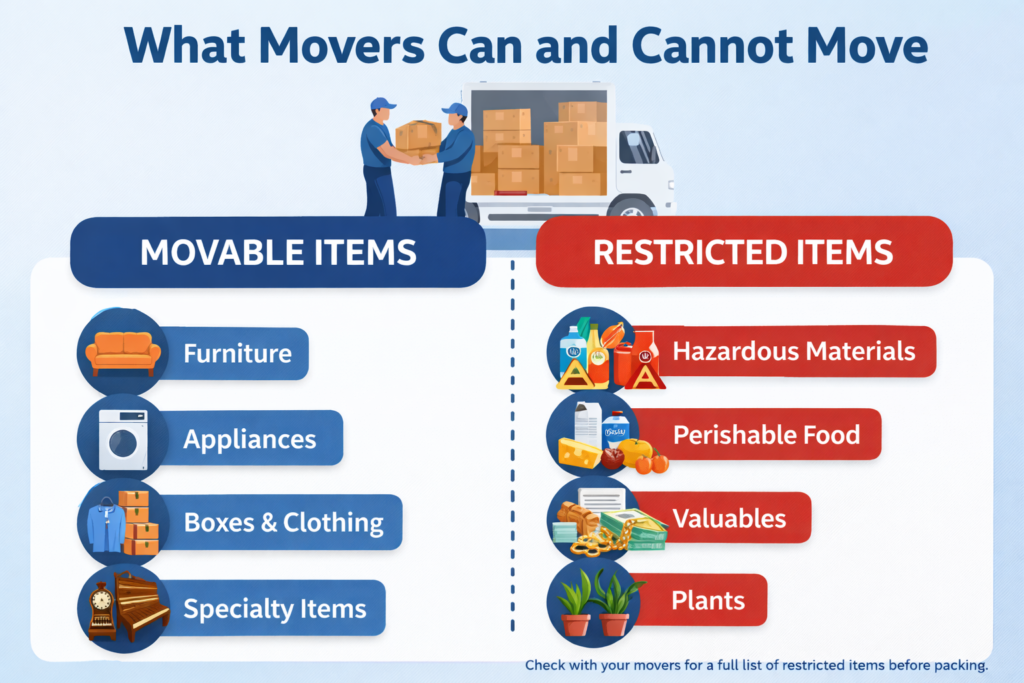
Most household belongings can be safely transported by professional movers when they are properly prepared. This includes everything from basic items to larger pieces handled through residential moving services, where furniture, appliances, and boxes are transported efficiently and safely.
Large furniture such as sofas, beds, wardrobes, and dining tables are carefully disassembled when needed, wrapped in protective materials, and secured inside the moving truck to prevent damage. In many cases, furniture moving services are used to safely disassemble, transport, and reassemble larger items without damage.
Fragile items like glassware, artwork, and electronics can also be moved safely, but they require proper packing. Each item needs to be wrapped individually and cushioned to prevent movement during transport. If you are unsure how to prepare delicate belongings, understanding how to move fragile items without damage can make a significant difference in protecting them. For added protection, many homeowners rely on professional packing services to ensure fragile items are properly secured before transport.
For more complex items such as pianos, antiques, or oversized furniture, movers use specialized techniques and equipment. These items often require specialty moving services, where trained movers use specific equipment and techniques to prevent damage. For example, piano moving services are designed specifically to transport delicate instruments while preserving their structure and tuning.
Items That Require Special Planning
Some items fall into a category where they can be moved, but only with the right preparation or additional services.
Electronics, for example, should ideally be packed in their original boxes or secured using proper protective materials. Large or valuable items like artwork and antiques may require custom packing solutions to prevent damage.
Furniture that is bulky or difficult to move often needs to be disassembled in advance. If this step is skipped, it can slow down the move or increase the risk of damage. Knowing how to prepare large furniture for moving day helps ensure these items are handled efficiently and safely.
Planning ahead for these items allows movers to bring the right equipment and allocate enough time for proper handling.
What Movers Cannot Move (and Why)
While most household items can be transported, there are certain things that movers will not take under any circumstances.
Hazardous materials are the most important category. This includes items such as gasoline, propane tanks, paint, cleaning chemicals, and anything flammable or corrosive. These materials pose serious safety risks during transportation and are strictly prohibited.
Perishable items such as food can also be an issue, especially for longer moves. These items can spoil, leak, or create unpleasant conditions inside the truck.
In addition, personal valuables like cash, important documents, jewelry, and sentimental items should always stay with you. While movers handle belongings with care, these items are best transported personally for security and peace of mind.
Plants may also be restricted depending on the distance and conditions of the move, as they are sensitive to temperature and handling.
Understanding these restrictions is a key part of preparing for the moving day process, as it helps you avoid delays and ensures everything is ready when movers arrive.
What to Do With Restricted Items
Once you understand which items movers cannot transport, the next step is planning how to handle them properly. Leaving this until the last minute is one of the most common causes of stress on moving day, so it is best to deal with these items early in the process.
Hazardous materials such as paint, chemicals, fuel, or cleaning products should be disposed of safely through local recycling or waste programs. Many communities provide designated drop-off locations, making it easier to remove these items responsibly before your move.
Perishable food is another category that should be addressed ahead of time. As moving day approaches, it helps to reduce grocery shopping, use what you already have, or donate unopened items. This prevents waste and avoids the risk of leaks or spoilage during transport.
Valuable and personal items such as documents, cash, jewelry, and sentimental belongings should always be packed separately and kept with you. Having these items nearby not only keeps them secure but also ensures they are easily accessible when needed.
Handling restricted items in advance keeps everything organized and eliminates last-minute decisions, allowing your move to proceed without unnecessary interruptions.
In these situations, storage services provide a secure and climate-controlled solution to keep your belongings safe until your new home is ready.
How Proper Preparation Makes Everything Easier
Preparation is one of the biggest factors that determines whether a move feels stressful or well-managed. When everything is ready before movers arrive, the entire process becomes faster, safer, and far more predictable.
Well-packed boxes, properly wrapped furniture, and clearly organized belongings allow movers to focus entirely on loading and transportation. This reduces delays, improves efficiency, and minimizes the risk of damage during the move.
Preparation also helps avoid confusion. When items are labeled clearly and nothing is left undecided, movers can place everything correctly in the new home without needing constant direction.
If you understand what happens on moving day step by step, it becomes clear that preparation is what keeps everything running smoothly from start to finish. It creates structure, reduces uncertainty, and allows both you and the moving team to work more efficiently together.
Working with professional moving services adds even more value to this process. Experienced movers not only handle the physical work but also provide guidance, helping you prepare properly and ensuring your belongings are transported safely and efficiently.
Common Mistakes That Lead to Problems on Moving Day
Even when people understand what movers can and cannot take, a few common mistakes can still cause delays or complications.
One of the biggest issues is leaving restricted items packed inside boxes. For example, cleaning supplies, liquids, or small hazardous items are often forgotten in storage areas like under sinks or in garages. If movers discover these items on moving day, they may need to stop and remove them, which slows down the entire process.
Another common mistake is underestimating how much preparation is required. Large furniture that has not been disassembled or fragile items that are not properly packed can delay loading and increase the risk of damage. This is especially important when the schedule is tight or when access to the property is limited.
Poor labeling is another issue that can create confusion. When boxes are not clearly marked, movers may not know which items require extra care or where items should be placed in the new home.
Understanding the moving day process helps prevent these problems. Taking time to prepare properly ensures movers can work efficiently without interruptions, keeping your move on track.
How to Communicate With Movers Before the Move
Clear communication with your moving company is one of the most important steps in avoiding issues and ensuring everything goes according to plan.
Before moving day, it is important to provide a detailed overview of what needs to be moved. This includes large furniture, fragile items, and anything that may require special handling. Being upfront allows movers to plan properly, bring the right equipment, and allocate enough time for your move.
It is also important to mention anything unusual about your property. Narrow hallways, multiple flights of stairs, limited parking, or elevator restrictions can all affect how the move is handled. Sharing this information in advance helps movers prepare and prevents delays on the day of the move.
If you are unsure whether certain items can be transported, asking ahead of time is always the best approach. This allows you to make alternative arrangements if needed and ensures there are no surprises.
When communication is clear and expectations are aligned, the entire move becomes more efficient, organized, and stress-free.
Frequently Asked Questions
Can movers transport everything in my home?
Most household items can be moved, but hazardous materials, perishables, and certain valuables are typically not allowed.
Do movers handle fragile items?
Yes. Fragile items can be transported safely when they are packed properly or handled by professional movers.
Should I keep valuables with me?
Yes. Important documents, jewelry, and personal valuables should always be transported separately.
Are plants allowed during a move?
This depends on the distance and conditions, but many movers recommend transporting plants yourself.
What happens if I forget to remove restricted items?
Movers may refuse to transport them, which can delay your move. It is best to prepare in advance.
Make Your Move Simpler and Safer
Understanding what movers can and cannot move is one of the easiest ways to avoid stress on moving day. With proper planning, clear expectations, and the right support, your move becomes far more organized and efficient.
At Smoother Movers, we help customers prepare every step of the way, ensuring nothing is overlooked and everything runs smoothly.
If you are planning a move, you can contact our team to discuss your needs and make sure everything is handled safely from start to finish.