

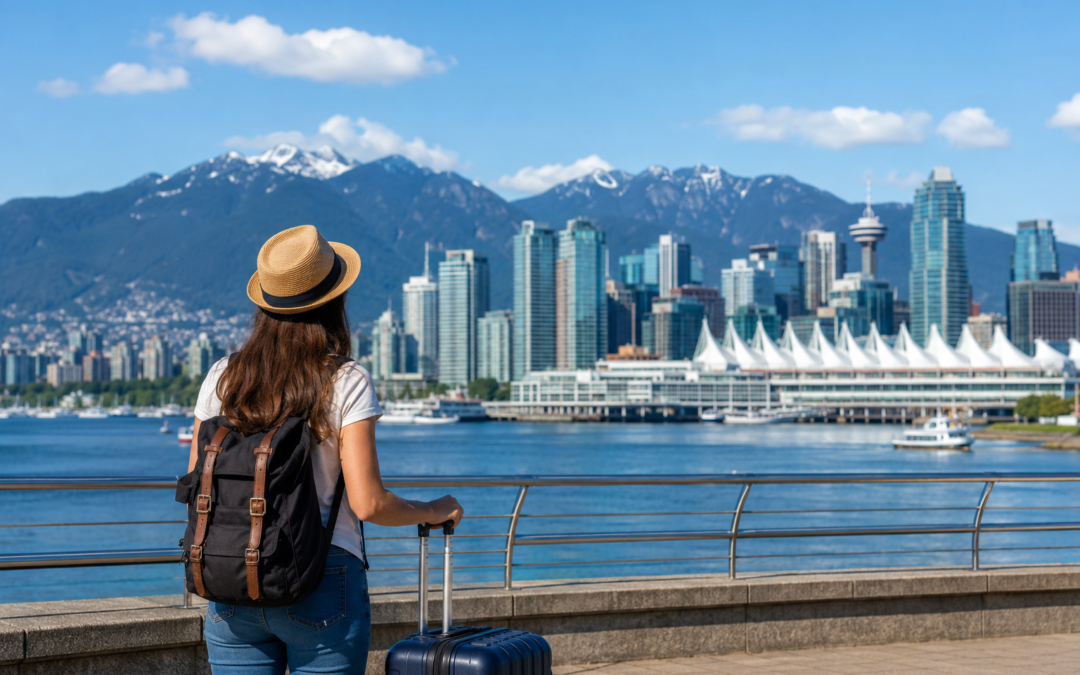
Vancouver gets sold to newcomers as a postcard: mountains behind the skyline, ocean at your feet, sushi on every corner. All of that is true. What the postcard leaves out is the rent, the rain, and the small administrative gauntlet you'll run in your first month. This guide is the version a friend who already lives here would give you over coffee: the genuinely good, the manageable, and the stuff worth bracing for before you sign a lease or book a truck.
First, the rent conversation
Let's get the hardest part out of the way. Vancouver is the most expensive rental market in Canada, and pretending otherwise helps no one. As of spring 2026, an unfurnished one-bedroom across Metro Vancouver averages around $2,100 a month, while the City of Vancouver proper sits closer to $2,250. Two-bedrooms commonly land north of $3,000. If you're coming from Calgary, Halifax, or almost anywhere in the Prairies, the sticker is going to sting.
Here's the genuinely encouraging news, though: the market has softened. The regional vacancy rate recently climbed to its highest level since 1988, new supply is coming online, and "turnover" rents, what you'd actually pay moving in today, dipped for the first time in years. Landlords in some buildings are now offering a month free or signing incentives to fill units. That's a meaningful shift from the brutal bidding wars of a few years ago. You still need to move quickly on a good listing, but you have a little more leverage than newcomers did in 2023.
The trade-off you'll be making is space versus location. A downtown studio and a roomy two-bedroom an hour out on the SkyTrain can cost about the same. Which one is "right" depends entirely on your commute tolerance and lifestyle, and that decision deserves its own deep dive, which is exactly why we wrote a companion piece on where to actually live in Vancouver, ranked by price, safety, and vibe.
Know your rights. BC protects tenants well
One bright spot: British Columbia has some of the strongest tenant protections in the country, and you should learn them before you hand over a deposit.
The annual allowable rent increase for existing tenants in 2026 is capped at 2.3%, tied to inflation and down from 3.0% the year before. Your landlord can't just raise your rent on a whim mid-lease. Security deposits are capped at half a month's rent, must be held in trust, and have to be returned (with interest) within a set window after you leave, minus any legitimate damage. The Residential Tenancy Act governs all of this, and the Residential Tenancy Branch exists specifically to resolve disputes, use it. Read your lease, photograph the unit's condition on move-in day, and keep every receipt. Future-you will be grateful.
The rain is real, but it's not what you think
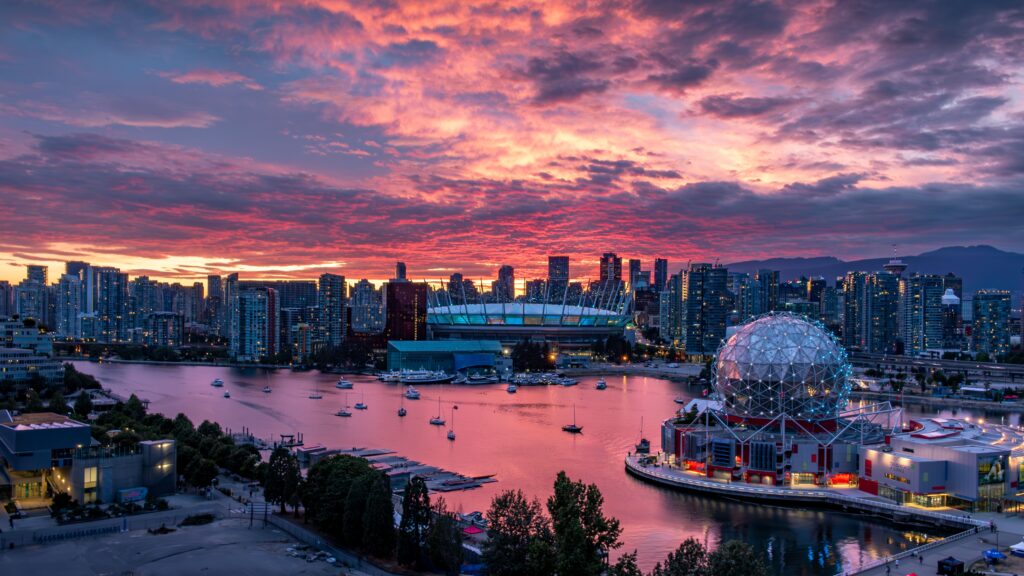
You've heard "Raincouver." It's earned. From roughly November through March, the city is grey and damp, and you will own a good waterproof jacket within your first three weeks whether you planned to or not. Locals largely don't carry umbrellas; they wear shells and get on with their lives.
What surprises newcomers is the upside. Vancouver winters are mild by Canadian standards, snow is occasional rather than relentless, and you're rarely scraping ice off a windshield at minus thirty. And the summers are genuinely spectacular: long, dry, golden evenings, beaches packed until 9 p.m., and a payoff so good it makes the wet winters feel like a fair trade. Come prepared for the damp, and the rest is gravy.
Getting around without losing your mind
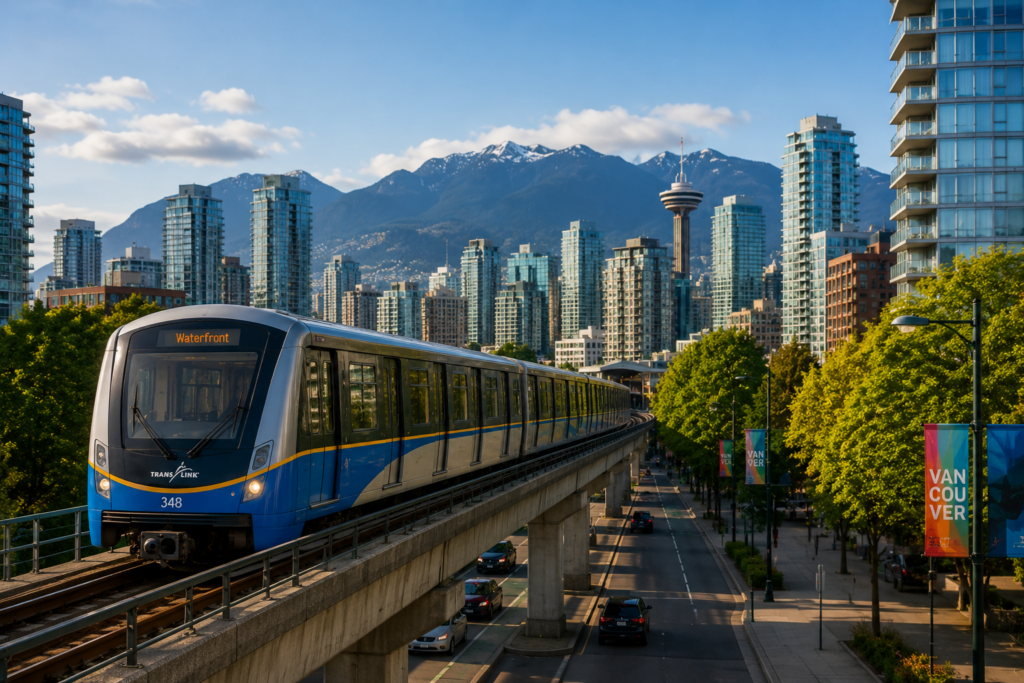
Vancouver's transit system, TransLink, is one of the better ones in North America. The SkyTrain is fast, frequent, and fully automated; the SeaBus glides across the harbour to the North Shore in twelve scenic minutes; and bus coverage is solid across the city. A monthly pass is far cheaper than running a car once you factor in BC's notoriously pricey auto insurance through ICBC, plus parking that can run hundreds of dollars a month downtown.
Many newcomers go car-free for at least their first year and don't miss it, especially if they land somewhere walkable. If you do bring a vehicle, budget for the insurance shock and know that street parking in dense neighbourhoods is a competitive sport. Cycling infrastructure, for what it's worth, is excellent and expanding.
The costs that hide behind the rent
Rent is the headline, but it isn't the whole story. Groceries run higher here than the national average, dining out adds up fast in a city this food-obsessed, and the median household income, around $124,000, tells you the bar for "comfortable" is set high. The flip side is that a lot of the best things in Vancouver are free: the seawall, the beaches, Stanley Park, the North Shore trails, and an outdoor culture that doesn't require a membership. People here spend more on experiences and the outdoors than on stuff, and your budget can lean the same way.
Timing your move can save you real money
This is the tip nobody tells newcomers, so here it is plainly: when you move matters almost as much as where. Rents and competition both peak from roughly May through August, when students turn over and relocating professionals all arrive at once. The quietest, cheapest stretch is October through February, fewer people hunting, more willing landlords, and the best negotiating position you'll get all year.
If your timeline is flexible, aim for a late-fall or winter lease start. You may save a few hundred dollars a month versus the same unit in July, and you'll have far less competition for it. Booking your movers in the off-season tends to be easier and more affordable too, since the trucks aren't all spoken for.
The actual move: don't make it harder than it needs to be
Once the apartment is sorted, the logistics are the last hurdle, and the one most newcomers underestimate. Vancouver's older buildings come with tight staircases, small elevators that need to be booked in advance, narrow lanes, and steep North Shore driveways. A cross-country container drop-off is not the same as actually getting your sofa up to a fourth-floor walk-up in Kitsilano in the rain.
This is where local experience pays for itself. A team that knows the city handles residential moves with the right truck for the lane and the right plan for the building. If you're landing on the North Shore, a popular choice for newcomers who want mountains out the window, working with established North Vancouver movers means crews who already know every switchback and loading restriction up there.
A few services worth knowing exist before you DIY yourself into exhaustion: professional packing services can compress days of bubble-wrapping into a single morning; secure storage bridges the gap when your move-out and move-in dates don't line up (which, in this market, happens constantly); and if you own anything genuinely awkward, specialist piano moving keeps your instrument and your stairwell intact. When you're ready to nail down a date, a quick free estimate gives you a firm number instead of a guess.
Frequently asked questions
How much should I budget for rent as a single person?
Plan for roughly $2,000–$2,500 a month for a one-bedroom in the city, less if you go further out or take a studio. Following the 30%-of-income rule comfortably in Vancouver realistically requires a strong salary, so many newcomers share or commute to make the math work.
Do I really need a car in Vancouver?
Usually not, especially if you live near a SkyTrain line or in a walkable neighbourhood. Transit is strong, insurance is expensive, and parking is scarce. Most people who go car-free in year one choose to stay that way.
When is the cheapest time to move to Vancouver?
October through February. Rents soften, landlords are more flexible, competition thins out, and movers are easier to book than during the May-to-August rush.
Is the rental market still as competitive as I've heard?
Less than it was. Vacancy is at a multi-decade high and turnover rents have eased, so while good units still go fast, you have more options and a little more negotiating room than newcomers did a couple of years ago.
What's the one thing newcomers regret not doing?
Booking movers and elevator time too late. Good crews fill up fast in peak season, and many buildings require advance elevator reservations. Lock both in as soon as your dates are confirmed.
Ready to make the move?
Vancouver rewards the people who arrive prepared and the move itself is the part you can fully control. Smoother Movers has been relocating families and newcomers across Vancouver and the North Shore for over 40 years, with the local know-how to make day one feel easy instead of overwhelming. Get your free, no-obligation moving estimate today and start your Vancouver chapter on the right foot.