

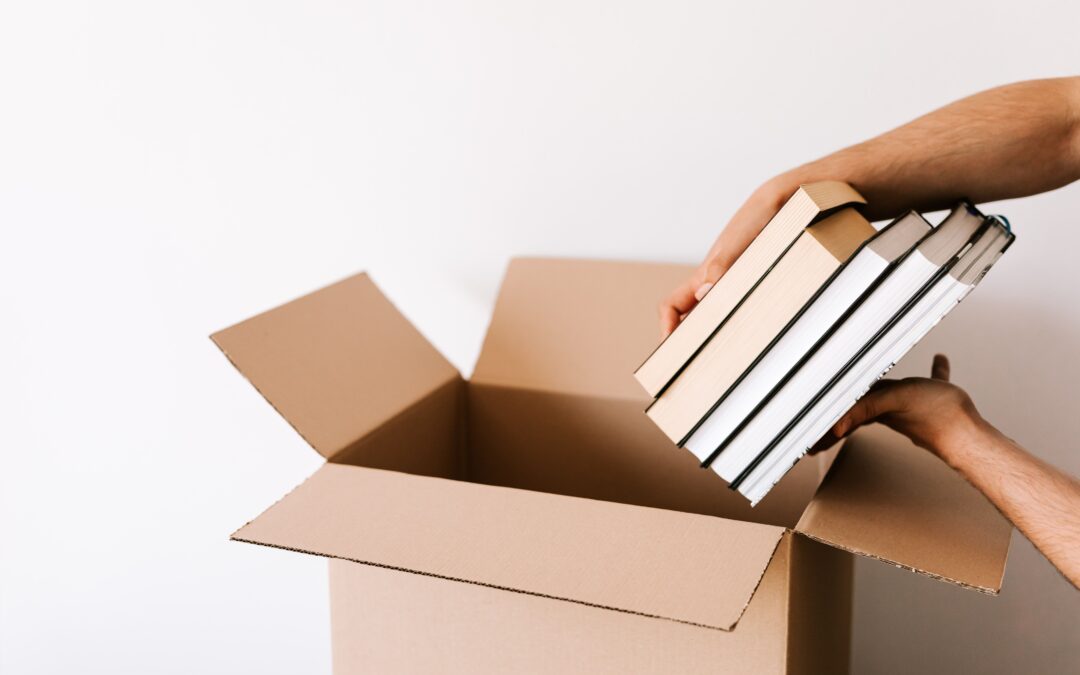
Books look like the easy packing job. They are small, they stack neatly, and there is nothing fragile to wrap. Then you fill a big box with them, go to lift it, and discover you have built something closer to a boulder than a box. Heavy books are the single most common cause of blown-out box bottoms and sore backs on moving day, and the fix is almost entirely about box size and smart packing. Here is how to pack books so the boxes survive, your back survives, and your favourite hardcovers arrive in perfect shape.
Pack books in small boxes, never large ones, and keep each box under about 40 pounds so it stays liftable and the bottom does not give way. Reinforce the box bottom with tape, pack heavier books flat on the bottom and lighter ones on top, fill gaps so nothing shifts, and keep valuable or hardcover books spine-down or flat to protect them. A box of books should be heavy but still carried comfortably by one person.
Here is the full method, including how to position books and how to protect the special ones.
Why do books need special treatment?
Because they are deceptively dense. A stack of books that looks modest can weigh a surprising amount, and books are the classic example of why the golden rule of packing exists: heavy items go in small boxes, light items go in big boxes. It feels backwards, because a big box looks more efficient, but a big box full of books becomes impossible to lift safely and almost always splits at the seams.
There are really two problems to solve. The first is weight, keeping each box light enough to lift without injury and sturdy enough not to collapse. The second is protection, keeping covers, spines and pages from bending, crushing or scuffing in transit. Get both right and books are genuinely one of the simplest things to move.
What boxes should you use for books?
Use small boxes, often called book boxes or 1.5 cubic foot boxes, which are sized precisely so that a full box of books stays within a sensible weight. This is the most important single decision in the whole job. Resist the temptation to use the large boxes left over from lighter items, because they invite you to keep stacking until the box is unmovable.
Make sure the boxes are sturdy and in good condition, not soft, reused ones that have lost their rigidity, since the bottom is under real load. Double-wall boxes are ideal for heavier collections. Whatever you use, reinforce the bottom with extra tape before you load it. Our guide to moving and packing supplies covers the right boxes to look for, and small boxes are always part of what we provide when we pack a home.
How to pack books, step by step
- Reinforce the box first. Tape the bottom seam of each small box, then run a second strip across it. Books put more strain on a box bottom than almost anything, so this step is not optional.
- Sort as you go. Separate heavy hardcovers and oversized books from lighter paperbacks. It makes loading faster and helps you keep each box balanced.
- Load heaviest on the bottom. Place the biggest, heaviest books flat on the bottom of the box, then build up with progressively lighter ones. This keeps the box stable and protects the lighter books from being crushed.
- Choose a position (see below). Pack books flat, spine-down, or upright as if on a shelf, depending on the book. Avoid packing with the spine facing up.
- Fill the gaps. Tuck packing paper or soft items into any spaces so books cannot slide or tip in transit. Movement is what bends covers and dents corners.
- Weigh it with a lift test. Before sealing, lift the box. If it is awkward to pick up, take some books out. Aim for heavy but comfortable, under about 40 pounds.
- Seal and label clearly. Tape it shut, mark it Books and heavy, and note the room. Everyone handling it then knows to lift with care.
Flat, spine-down, or upright, which way should books go?
How you position books matters, especially for the ones you care about. Each method has its place.
| Position | How | Best for |
| Flat, stacked | Lay books flat, largest at the bottom | Most books, and the safest for valuable hardcovers |
| Spine-down, upright | Stand books with the spine against the box bottom | Packing like a shelf, keeps spines supported |
| Spine-up | Spines facing the top of the box | Avoid, the pages splay and warp under pressure |
The one rule everyone should remember is never to pack books spine-up. When a book sits with its spine up and pages facing down, the weight pulls the pages away from the binding, warping the book and damaging the spine. Flat stacking is the gentlest for valuable and hardcover books, while standing them upright spine-down works well and mimics how they sit on a shelf. Either is fine, just not spine-up.
How do you protect valuable or special books?
Rare, antique, leather-bound or sentimental books deserve a little extra care. Wrap each special book individually in clean packing paper to protect the cover and corners, and avoid newspaper directly against them, because the ink can transfer. Pack these flat rather than upright to take all the pressure off the spine. For a valuable collection, pack those boxes a touch lighter so there is no crushing weight, and keep them somewhere climate-stable rather than in a damp garage or a hot vehicle for long, since humidity is a book's enemy. In our rainy Vancouver climate, keeping book boxes dry on moving day matters too, so they are carried out covered and never set down on a wet driveway.
Is moving day the time to downsize your books?
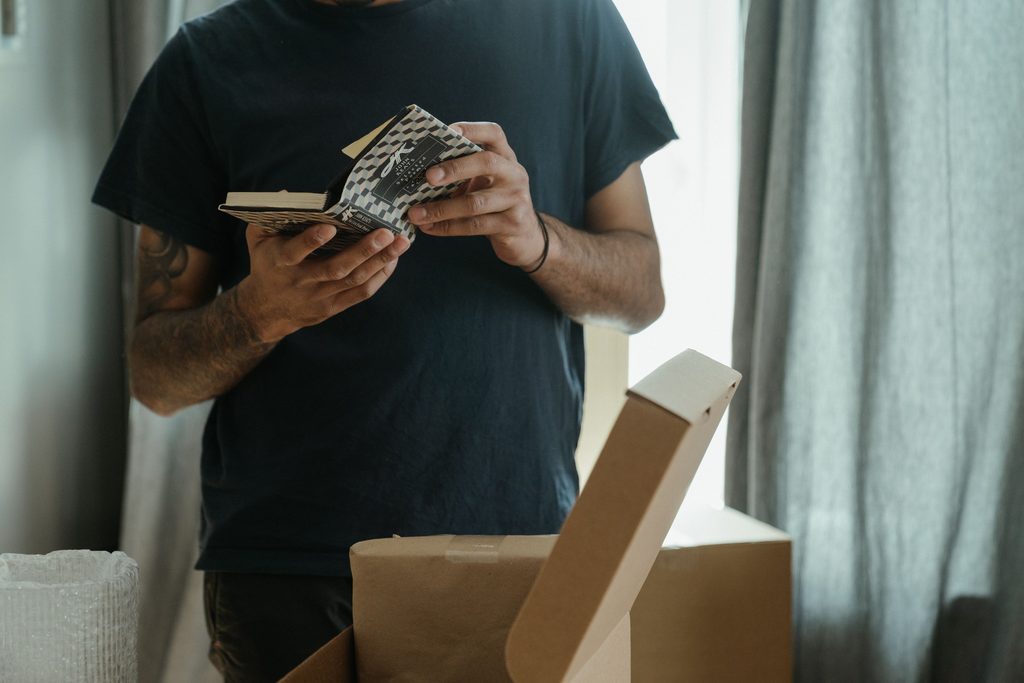
Honestly, yes, and books are one of the best things to thin out before a move, precisely because they are so heavy. Every box you do not pack is weight you do not carry, a box you do not buy, and space you do not pay to move. As you pack, it is the perfect moment to set aside books you will not read again to donate or pass on. For anything truly past its life, like water-damaged or mouldy books, a junk removal run clears them out so they are not taking up a box at all. A lighter library is cheaper and easier to move, and kinder to settle into shelves at the other end.
Pack smart, lift light
Books reward a little strategy more than almost anything else in a move. Small boxes, reinforced bottoms, heavy on the bottom and light on top, spine-down not spine-up, and a quick lift test before you seal. Do that and your boxes hold, your back holds, and your library arrives ready to shelve.
Smoother Movers, founded by Douglas Bensley with more than 40 years of local experience since 1980, packs and moves homes across Vancouver and the North Shore, and we bring the right small boxes and supplies with us. See how our packing and residential moving services work, get a free estimate, or call our Vancouver office on 604 682 2232 or our North Vancouver office on 604 987 8655.
Frequently Asked Questions
What size boxes should I use for books?
Small boxes, often called book boxes or 1.5 cubic foot boxes. They are sized so that a full box of books stays at a liftable weight. Never use large boxes for books, because they become too heavy to lift safely and the bottoms tend to split.
How heavy should a box of books be?
Keep each box under about 40 pounds. A good test is to lift it before sealing, and if it is awkward to pick up, remove some books. The box should feel heavy but still comfortable for one person to carry without straining.
How do you pack books so they do not get damaged?
Reinforce the box bottom with tape, pack heavier books flat on the bottom and lighter ones on top, and position books either flat or spine-down, never spine-up. Fill empty gaps so nothing shifts, and wrap valuable or hardcover books individually in clean packing paper.
Should books be packed flat or standing up?
Both work. Flat stacking is gentlest and best for valuable hardcovers, while standing books upright with the spine down, like on a shelf, keeps the spines supported. The one position to avoid is spine-up, which warps pages and damages bindings under pressure.
How do I protect valuable or antique books when moving?
Wrap each one individually in clean packing paper, not newspaper, which can transfer ink. Pack them flat to protect the spine, keep those boxes a little lighter, and store them somewhere dry and climate-stable rather than a damp or hot space. Keep boxes covered and off wet ground on moving day.
Can I use suitcases or rolling bags for books?
Yes, and it is a smart trick. Wheeled suitcases are ideal for heavy books, because the wheels carry the weight instead of your back. Fill them with your heaviest books, and save the boxes for the rest. Just do not overfill a bag to the point you cannot roll it.
Too many boxes of books to face?
We pack and move Vancouver and North Shore homes with the right small boxes, so your library arrives safe and your back stays intact.