

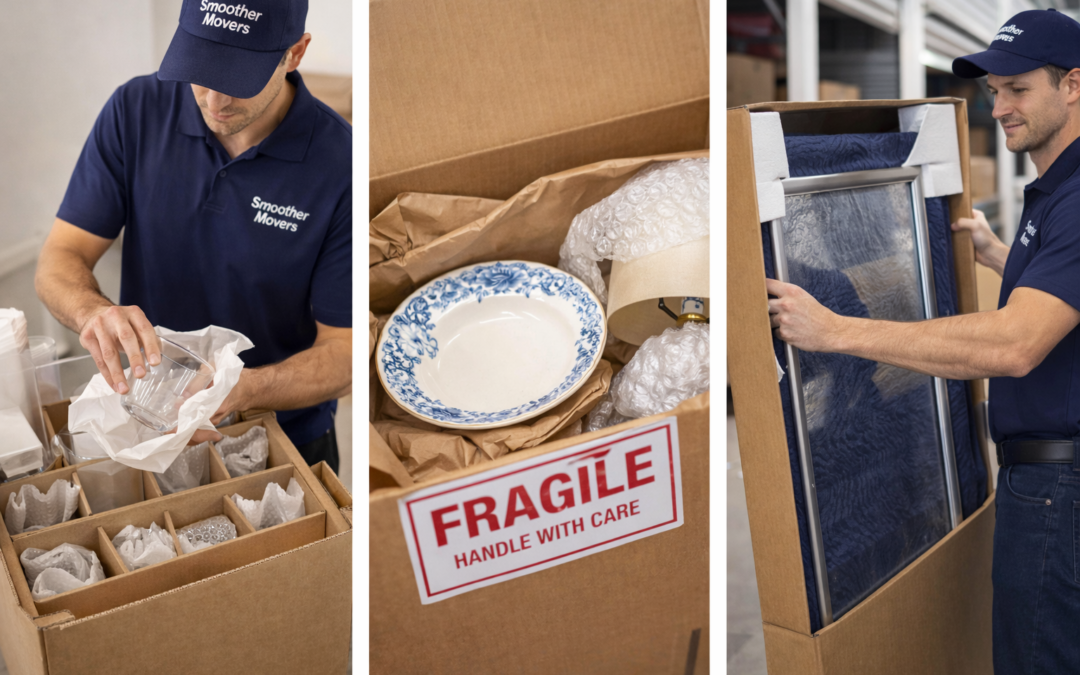
Moving fragile items is one of the most stressful parts of any relocation. Glassware, artwork, electronics, antiques, and decorative items all require extra attention to ensure they arrive safely at your new home.
Many people worry that delicate belongings will break during transportation. The good news is that with proper preparation, the right packing materials, and careful handling, fragile items can be moved safely.
At Smoother Movers, protecting delicate belongings is an essential part of every relocation. Our team uses proven techniques and professional equipment to ensure fragile items are properly packed, loaded, and transported during the moving day process.
Understanding how fragile items should be prepared and handled can significantly reduce the risk of damage and make your move far less stressful.
Why Fragile Items Require Special Packing
Not all household belongings can be packed in the same way. Fragile items are more vulnerable to pressure, vibration, and movement during transport.
Even small shifts inside a moving truck can cause delicate items to crack or break if they are not properly protected.
Common fragile household items include:
- Glassware and dishes
- Mirrors and framed artwork
- Lamps and decorations
- Electronics and televisions
- Antiques and collectibles
Each of these items requires individual wrapping, protective cushioning, and careful placement inside moving boxes.
Professional movers understand these risks and take the necessary steps to ensure fragile belongings remain secure throughout the relocation.
Use the Right Packing Materials
Choosing the correct packing materials is one of the most important steps when moving fragile items.
Standard cardboard boxes alone are not enough to protect delicate belongings. Proper cushioning materials help absorb movement and protect items from impact.
Recommended packing materials include:
- Bubble wrap
- Packing paper
- Foam inserts
- Dish pack boxes
- Protective moving blankets
These materials create multiple layers of protection that help prevent damage during transportation.
For homeowners who want extra support, professional packing services provide specialized materials and packing techniques designed specifically for moving fragile belongings safely.
Wrap Each Item Individually
One of the most common mistakes people make when packing fragile belongings is placing multiple items into a box without proper wrapping.
Every delicate item should be wrapped individually before it is placed inside a box.
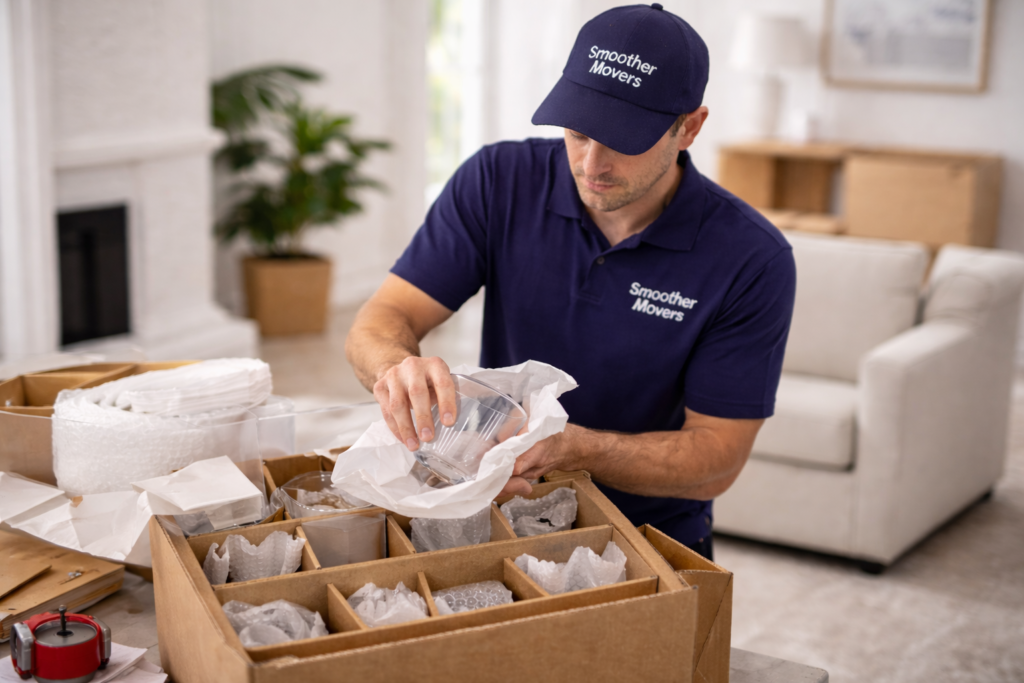
For example, glassware and dishes should be wrapped in packing paper or bubble wrap before being stacked inside boxes. This prevents items from rubbing against each other during transportation.
Once wrapped, items should be placed upright with cushioning materials between them to reduce movement.
Taking the time to wrap each item properly can make a major difference in preventing damage during a move.
Choose the Right Box Size
The size of the box used for fragile items matters more than many people realize.
Fragile belongings should generally be packed in smaller boxes. Larger boxes create more space for items to shift during transport, increasing the risk of breakage.
Heavy fragile items like plates or ceramics should also be packed in smaller boxes to prevent excessive weight that could cause boxes to collapse.
Professional movers often use specialized dish boxes with built-in dividers that keep glassware separated and secure.
Cushion the Bottom of Every Box
Before placing any fragile items into a moving box, a protective base layer should be created.
This bottom layer absorbs shock when boxes are set down or moved during transportation.
Common cushioning materials include:
- Crumpled packing paper
- Foam padding
- Bubble wrap
After placing wrapped items inside the box, additional cushioning should be added around them to eliminate empty spaces.
Boxes with too much empty space allow items to move, which significantly increases the risk of damage.
Label Fragile Boxes Clearly
Even when fragile items are packed properly, labeling boxes clearly is essential to ensure they are handled with care during the move.
Boxes containing delicate belongings should always be marked with clear labels such as FRAGILE, HANDLE WITH CARE, or THIS SIDE UP. These labels help movers identify which boxes require extra attention during loading, transportation, and unloading.
Proper labeling also helps movers organize the truck more effectively. Fragile boxes can be placed in safer positions within the truck where they are less likely to be stacked under heavier items or exposed to unnecessary pressure.
In addition to labeling boxes as fragile, it can also be helpful to include the room where each box belongs. This makes the unloading process more organized and allows fragile items to be placed directly in the correct location inside the new home.
Taking a few extra minutes to label boxes properly can significantly reduce the risk of damage and make the unpacking process much easier once the move is complete.
Protect Mirrors and Artwork
Mirrors and framed artwork require additional care during packing and transportation.
These items contain large glass surfaces that can crack easily under pressure.
To protect mirrors and frames properly:
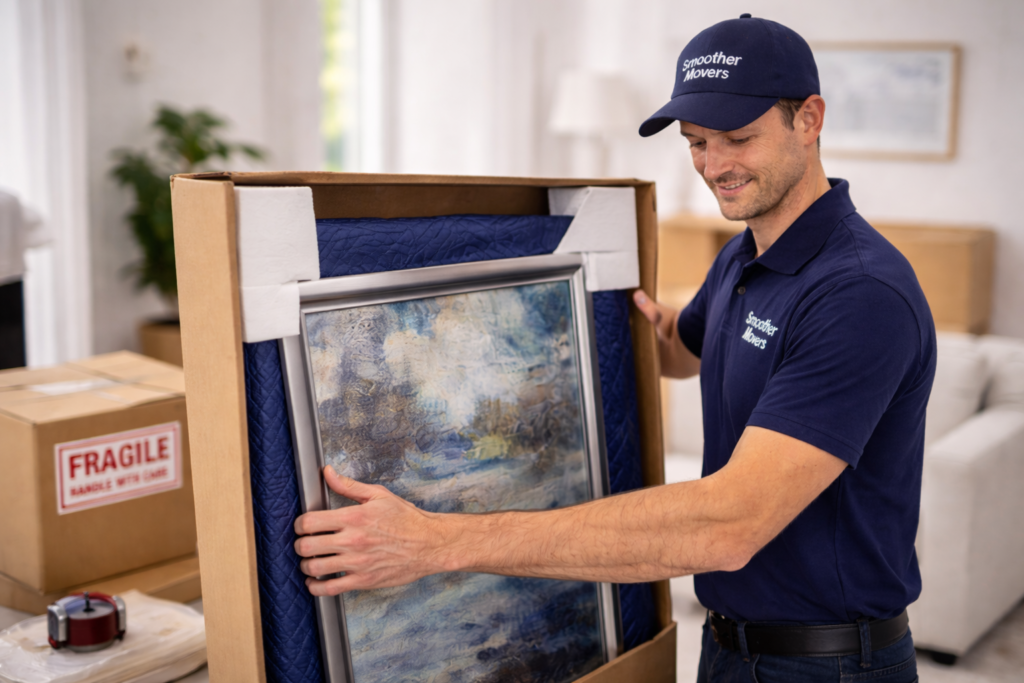
- Wrap the entire piece in protective packing paper or bubble wrap
- Cover corners with foam corner protectors
- Place the item inside a mirror box designed for moving
Mirror boxes provide structural support that reduces pressure during transportation.
Our moving services include specialized protective materials designed to transport delicate household items safely.
Handle Electronics Carefully
Electronics are another category of fragile belongings that require careful packing.
Televisions, computers, and audio equipment should ideally be packed in their original manufacturer boxes if available.
If original boxes are not available, professional movers can pack electronics using protective blankets, foam padding, and custom packing boxes.
Cables and accessories should be packed separately and labeled clearly to make setup easier after the move.
Proper packing ensures electronics remain safe throughout transportation.
Load Fragile Boxes Properly
Packing fragile items correctly is only part of the process. How boxes are placed inside the moving truck also matters.
Fragile boxes should never be stacked underneath heavy furniture or appliances.
Instead, they are typically placed on top of heavier boxes and secured with protective padding.
Professional movers carefully organize the truck to prevent items from shifting during transportation. This organization is a key part of the moving day process and helps protect delicate belongings throughout the trip.
When Professional Packing Helps
Packing fragile items can be time-consuming and stressful.
Many homeowners prefer to leave this task to professionals who have experience handling delicate belongings.
Professional packing services provide several benefits:
- High-quality packing materials
- Efficient packing techniques
- Reduced risk of damage
- Faster packing process
At Smoother Movers, our team is trained to safely pack fragile items ranging from delicate glassware to valuable antiques.
This ensures your belongings remain protected throughout the relocation.
Storage for Fragile Belongings
Sometimes belongings need to be stored temporarily during a move.
For example, you may need to move out of your current home before the new one is ready.
In these situations, secure storage services can keep fragile belongings protected until delivery can be completed.
Professional storage facilities are designed to keep household goods safe from damage, temperature changes, and humidity.
Combining proper packing with secure storage ensures fragile items remain protected throughout the entire moving process.
Common Mistakes to Avoid
Even when people try to pack carefully, a few common mistakes can increase the risk of damage.
These include:
- Overpacking boxes
- Leaving empty space inside boxes
- Using weak or reused boxes
- Mixing fragile items with heavy objects
Avoiding these mistakes can significantly reduce the chances of items breaking during transportation.
When in doubt, professional movers can ensure fragile belongings are packed safely and transported properly.
FAQs
What is the safest way to pack fragile items for moving?
The safest approach is to wrap each item individually, cushion the bottom of the box, and fill any empty spaces with packing material to prevent movement.
Should fragile items be packed in large boxes?
Fragile items should usually be packed in smaller boxes to limit movement and reduce the risk of breakage.
Do movers pack fragile items?
Yes. Many moving companies offer professional packing services designed to protect delicate belongings during transportation.
How should glassware be packed?
Glassware should be wrapped individually with packing paper or bubble wrap and placed upright in boxes with cushioning between each item.
Are fragile boxes placed differently in the moving truck?
Yes. Fragile boxes are usually placed on top of heavier items and secured to prevent shifting during transportation.
Make Your Move Safer
Moving fragile belongings doesn’t have to be stressful when the right preparation and expertise are involved.
At Smoother Movers, our team uses professional packing materials and careful handling techniques to ensure delicate items are transported safely from start to finish.
Whether you need help with packing, transportation, or storage, our experienced team is ready to make your move as smooth and secure as possible.
If you are planning an upcoming move, you can contact our team to discuss your moving plans and get started with professional support.